Showing posts with label Album Reviews. Show all posts

01 June 2013

The Pastels - Slow Summits

Album Review: The Pastels - Slow Summits (Domino)

Having spent the last few years writing almost exclusively about music from Scotland, it's easy to forget where I came in. There has always been an almost dizzyingly complex, often incestuous scene - not least in Glasgow - but back then, before Bandcamp and iTunes, it was a much more location specific affair. When I was in town, I'd grab handfuls of vinyl singles by bands I hadn't heard of - and the hit rate was pretty damn good too. I recognise that it's probably that grounding in opening my ears to unknown sounds which means I'm still intrigued to hear new things today. But one constant through this period, and it has variously been a proud allegiance or a guilty pleasure depending on the prevailing trends, has been The Pastels. An ever changing line-up rotating around Stephen McRobbie, alliances with US and Japanese artists exploring the edges of pop music, and a work-rate more akin to a cathedral stonemason than a musician in the internet age have all conspired to put The Pastels right back on the fringe of things again. But, they're back...

The intervening years roll effortlessly away as 'Secret Music' shuffles in. A tumble of glockenspiel chimes, furtively bubbly baselines and Katrina Mitchell's laconic, sensuous drawl. The song sprawls like a stretching cat, luxuriating in a glossy production which hooks in Stephel's distinctive brogue and some pretty horn embellishments. 'Night Time Made Us' ups the tempo somewhat, with a churn of scratchy but solid guitars and a confident but wonderfully ungoverned vocal from Stephen where he wonders "when did the burn become a river?". The passage of time seems like a key concern here, and elsewhere on this record. There is more brass accompaniment here, which adds a stomping 60s soul dimension to what shapes up into a truly lovely piece of music. The sunny, pop shuffle of recent single 'Check My Heart' transports me back to the relatively carefree early 1990s, as it skips light-footed around Glasgow's shining wet pavements, describing a scene not so much disappeared but ceaselessly reinvented. Nights in G12 are no less torrid and hip, if a little more expensive and a little less mysterious these days.

Beginning with the evocative "When the city is framed by a blue black sky..." there is a quiet, distant quality to 'Kicking Leaves'. Gentle strings and soft flecks of brass shore up the fragile vocals provided by guest vocalist and former full-time Pastel Aggi. A wobbly organ and ever-so-slightly off key guitar launches 'The Wrong Light' with Stephen's famously dissonant, low burr rarely sounding more in tune with this slow-burning ballad. A chorus of sweetly sung backing vocals emphasize his claim that "we are shadows of the night". Some tougher, angular guitar lines and little stabs of brass colour in the background and suddenly it could be anywhere in The Pastels distinguished back catalogue. This is no bad thing - and it's not about a lack of progress. It's more about striking out for new territory in a measured, confident way whilst holding on to all of that uncertainty and shyness about ever quite being the band of the moment.

The extended film-soundtrack shuffle of 'Slowly Taking Place' bristles with edgy guitar jangles, shuffling drums and a mournful noirish woodwind melody among bleeps and twinkles of electronics. It should be adorning the opening credits of a mid-sixties movie - Glasgow standing in for Paris, a tracking shot of an old Citroen crossing the Clyde. Elegant couples rendezvousing under the clock at Central Station. It's a beautifully done set-piece, with The Pastels' influences - both old and new - copiously nodded to.

So, all these year later, all this water under the bridge, and with the kind of indie-pop they typified in their various reinventions having drifted out of vogue and back again, does "Slow Summits" still produce spine tingles for this increasingly arthritic pop kid? Well, in fact it does - its a timeless, joyously old-school indie romp with rough edges and a heart-on-sleeve bravado. It's just what made us want to keep our fringes long and wear our school sweaters. It's what convinced plenty of us that picking up a guitar would be a good move - with variable results. Dismiss them as twee or wilfully inept all you like - the truth is, you can never write off The Pastels.


"Slow Summits" is available now on Domino Records and via your local record shop.


27 April 2013

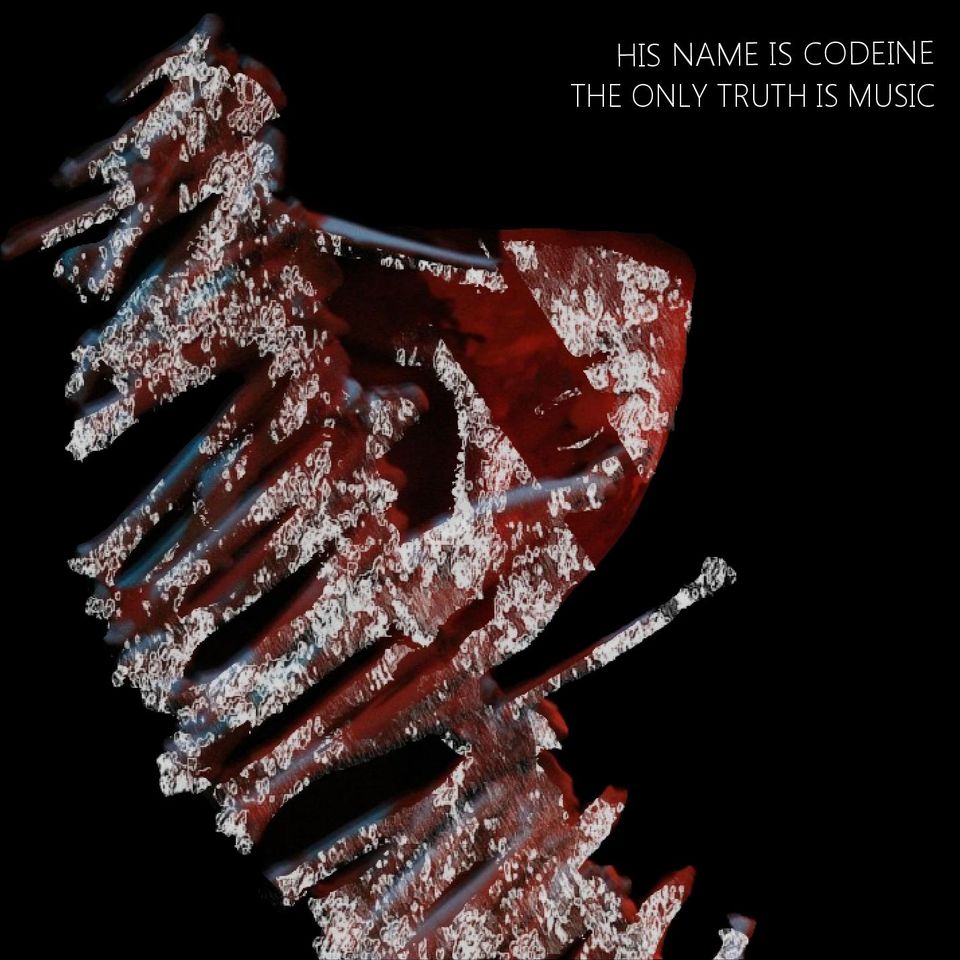
His Name Is Codeine - The Only Truth Is Music


Album Review: His Name is Codeine - The Only Truth Is Music (Dead Book Records)

I've lost count of the times I've heard that guitar music is over. It's a mantra repeated whenever each successive generation of young musicians discovers the white-hot technology of their era, and decides that the old ways just won't cut it anymore. But for every revolution there is a resistance movement - skulking in garages, doing time in dark club basements and trawling for dog-eared copies of old, revered records. With a lineage harking back to New York punk, West Coast psyche-rock and good old fashioned noisy Scottish pop music - along with a name stolen from a Townes Van Zandt track dripping with bitter misery - His Name Is Codeine are way too focused on making a beautiful noise to be concerned about the prevailing trends. And so, maybe we can't write the obituary for guitar music just yet?

There is something almost meteorological about His Name Is Codeine as typified on opener "My Tragic End" where the band stand, placid and stoic in the centre of a growing storm. As the pressure waves of churning guitar begin to increase in intensity, Lyn Ralphs's low growl of a vocal never varies from its strangely calm, alluring path. I first heard of His Name Is Codeine via the sprawling minutes of tension and menace which make up "Before The Apple Fell", where crashing waves of noise are accompanied by howls of rage, thunderous percussion and the sudden dips and swoons of a glorious chorus leading to a spiralling, dizzy coda. This is visceral, searing noisy pop which fuses an impressive pallete of influences and reference points - from whirling prog rock organs to shattered blasts of guitar which hark back to punk - all delivered with a confidence and assurance which belies this band's relatively recent formation. But on "Shoot To Kill" the influences land somewhat closer to their Elgin home as later period Jesus and Mary Chain is reworked to sound far more relevant and turbulently noisy than the Reid brothers have managed in a while. An insistent beat supports a sprawl of caterwauling Sonic Youth guitars while male and female vocals play out a sullen, gloomy duet.

By the time "Not A Number" reaches its climax via a Renderers style, country-pop flecked shudder through the swamps, you'd be forgiven for thinking there were two distinct bands at work here. This is a dense howling take on Americana which typifies the bolder, grander ambition the band manages to maintain alongside it's more accessibly poppy moments such as "Replica Gun" - where apocalyptic themes are explored in unnervingly gentle, naive vocals. This mode switch feels sometimes a little deliberate, and they don't always dovetail completely - which sometimes makes for wonderful dynamics, but at other times feels a little haphazard and jagged. But perhaps this always going to be a tricky aspect of sequencing an album built around several epic longer tracks? The next of these is "Magdalena" - a woozy, circular madrigal set against frequent flashes of razor sharp guitar noise. Throughout, a solid chug of ominous bass anchors the song to planet earth - but perhaps only just, as its wah-wah heavy conclusion seems intent on breaking loose and causing serious damage.

There's an almost Rolling Stones like air to the opening of "The Measure of Your Misery" with its swoon of organ and ringing bluesy guitars. The laconic pace and drawling vocal is mere preparation though, for the sonic onslaught that follows. Explosions of guitar suddenly intrude, and never quite leave as the vocals and noise vie for dominance. Things threaten to disintegrate entirely, but remarkably the swaggering melody returns and the band take to switching effortlessly between these poles. There are similar tricks at work too on the closing track "Medal" which begins with the band in a Velvet Underground like daze, where Lyn Ralph plays Maureen Tucker when she took her rare turns in front of the microphone. Swishes of slide guitar echo in the distance while the vocals shimmer and twist around them, an oddly childlike stream of conciousness emerging as a prelude to a repeated, ear-splitting swirl of noise and voices.


"The Only Truth Is Music" seems a brash declaration for the title of a band's debut album. But in this case though it fits perfectly. His Name Is Codeine have produced a complex, dynamic and ambitious record which is just as comfortable trawling the sleazy gutters as it is shooting for celestial highs. When they strike the right balance, this is searing, angry and intense music which often betrays something of the frustration of small-town living besides it's loftier preoccupations. Staying true to the ancient pillars of rock and roll - even when it's not quite the done thing - but doing it just how they think it should be done... Perhaps the only truth really is music after all?

His Name Is Codeine release "The Only Truth Is Music" on 30th May via Dead Book Records. In the meantime, you can pick up their debut recording "Before The Apple Fell" from Bandcamp

Current live dates to support the album release are: May 4th in Peterhead, May 11th in Aberdeen (with Delta Mainline and The Carousels) and on June 1st (with Seas, Starry), June 14th in Edinburgh (with Delta Mainline and Exit Calm) and Glasgow Psych Fest on June 21st-23rd.

16 April 2013

eagleowl - This Silent Year


Album Review: eagleowl - This Silent Year (Fence)

Earlier this year the world - or at least the part of it that lives incessantly on social networks - entered meltdown as My Bloody Valentine suddenly released their first material for 22 years. Waiting for your favourite bands to produce new work is never easy, and as everyday concerns sap time and resources it sometimes seems a miracle that emerging acts manage to take the major step of recording an album at all. Nowhere near that far adrift of a schedule, but famously tardy, eagleowl have finally taken a similarly momentous leap. Equipped with a full six piece band including a real drummer, and backed by the encouraging and supportive ministrations of Fence Records who have accommodated them in a host of live events in recent years, the band's long-awaited and sometimes seemingly unlikely debut album has arrived. In the process it has earned an almost immediate slot in this year's list of memorable releases.

Beginning in characteristically understated fashion with "Forgotten" with its echoing footsteps and forlorn guitar chimes, "This Silent Year" was never likely to be a feel-good summer record. If you've followed eagleowl thus far you'll have witnessed their potential for sweeping, orchestral dynamics which - in recorded terms at least - has so far only really achieved fruition on their superb Toad Session. However here, recorded sympathetically by Tommy Perman of FOUND, the band positively shimmers - achingly pretty harmonies, swoons of cello and thunderous double-bass courtesy of Clarissa Cheong underpinning Bart's sparse guitar and low-key, wounded but defiant vocals. Strings are allowed to buzz and resonate, microphones are cranked up to catch every breath and whisper - it's a surprisingly perfect way to hear the band, not dissimilar to the pin-drop echo of an awestruck Gnomegame audience just a few short days back in Fife.

The early part of the album is defined by a pair of tracks which stake out eagleowl's territory unmistakably. First on "Eagleowl vs. Woodpigeon" which judders along with a choppy, waltz time rhythm, linked by screeches and swoops of strings. The guitar plays a more defined role on "Not Over" where the spirit of Galaxie 500 is summoned and forced to consider how they might have sounded with a string section in their regular line-up. As Bart notes that "it's so quiet when you're not here" and increasingly insistently urges "say something to me", the themes of tense silence and mute acquiesence which thread through this record begin to emerge. Plucked violin strings and a groaningly lovely cello melody from Hannah Shepherd provide a backdrop to a whole-band harmony which resolves into an almost maritime crash of cymbals.

"Summerschool" pitches bell-clear guitar notes and plangent bass into a heady, hazy blur of boy/girl vocals redolent of the finest moments of Yo La Tengo's slower passages. The pace is glacial, but there is warmth in the delivery. There is a bona fide pop hit at the heart of "It's So Funny" with its jaunty pulse of bass and near interplay of vocals - but this is immediately sabotaged by a radio unfriendly refrain of "It's so funny, we don't fuck anymore". Somewhere in Surrey an unconcerned, mahogany faced Cliff Richard plays tennis - unaware that his biggest UK hit of the 1970s has formed the basis for perhaps the most directly bitter track on "This Silent Year".

The ambitious but surprisingly focused twelve minutes of "Too Late In The Day" centre on a mournful violin drone which winds around gentle drums and a fragile, strummed guitar which almost threatens to drown in the rich arrangement of strings. Then, finally, the sonic extremes which have been hinted at throughout the album burst free. A thunderous storm of distorted guitar noise and drums rages while the strings are tossed and blown around like the fishing boats in Anstruther harbour. Almost a relief after this howl of rage, "Laughter" is something of an old stalwart in the eagleowl canon - but is presented here as a brief, sparse and emotive full-stop to close the album. It's both a look back over the shoulder at eagleowl's past and a nod to the future.

It might have taken them a while, but in "This Silent Year" eagleowl have captured the resonant dynamics of their live shows in a way their previous recordings only hinted at. There's no doubting this is a beautifully arranged, musically accomplished record - but it's also strikingly direct, emotionally intelligent and heart-piercingly dark matter at times. The past couple of years may well have been relatively silent in the eagleowl nest, but things are about to get a lot noisier...


eagleowl release "This Silent Year" on vinyl, CD and download via Fence Records on May 13th. A special pre-release purchase is available at the Fence website. The album will be launched at three shows:

14 December 2012

Album Review: Evil Hand - Wulver


Evil Hand - Wulver

One of the surprise highlights of last year came early with the February release of "Rain Check" by Evil Hand, essentially a solo vehicle for Derek Bates – variously of Genaro and Bottle of Evil. Like all early-in-the-year releases, it's all too easy to find it eclipsed by later events but it was good to see some fulsome praise surfacing at year-end for this release, hinting at the insistently memorable nature of the material. So as autumn descended, Bates retreated to work on the follow-up to "Rain Check", emerging with a churning, dark and equally noisy collection of music which once again seems barely able to contain the ebullient pop sensibilities attempting to burst from its core. Again here on this longer set of songs, Bates manages to couple screeds of perception-altering white noise with a knack for a life-affirming, soaring chorus, seemingly melding the two together with relative ease.

There are almost too many highlights here to describe, but since I've developed a reputation for writing way too much, I'm going to have a crack at it of course - beginning with "The Waves Still Come" which hides its dark heart behind a sunny disposition, a shimmer of noise and a suspiciously jaunty, up-tempo beat. Bates' tries hard to convince you everything is fine from the outset, but once the chiming guitars join and the vocal climbs, it moves up a corresponding emotional gear and any pretence at being nearly as happy as the music implies quickly falls away. It's easy to let the simplicity of the arrangement hide the fact that this is a thoughtful and introspective fragment dressed up as a neat little nugget of classic, Byrds-like pop. Meanwhile, "Exile on Fr. Griffin Road" comfortably occupies the elegiac territory which The Go-Betweens used to inhabit. Namely, a downbeat and intelligent corner of the musical universe where it never stopped being cool to have swoops of pretty, atmospheric guitar curling around wistful vocals. Like all the best songs, there is a journey at the heart of this one – through Galway's suburbs and over the river into town, feeling out of place and out of time, with music finally giving way to monologue as an apparently well-lubricated Irishman delivers a stream of boozy wisdom.

The curiously named "It's Dark Enough Outside, Don't Be Dark Inside" invokes the spirit of Yo La Tengo, starting with a nagging little loop which continues to noodle oddly away over a woozy reel of guitars and glockenspiels. Things take a dramatic sonic shift here, as a collision of electronica accompanies a growing tide of voices ranging from eerie whispers to howls of frustration. It's unsettling, even a little tricky to listen to at points, but it makes complete sense in the context of this strange but wonderful record. In utter contrast, "Everything Reminds Me" is an unashamed slab of catchy, sharp-edged pop hung around buzzsaw guitars and tight electronic rhythms which could have emerged directly from "Autoamerican" era Blondie. Throw in a reverb-heavy chorus which captures the imagination on the very first listen, and couple this with a sample of Charlie Chaplin's stirring and portentous speech from "The Great Dictator" and you have an oddly compelling album highlight in the making. This ushers in the impressive and affecting "Somewhere To Burn" which bleeps and twitters into blissful existence, before covering more familiar Evil Hand ground. Beautifully noisy guitars are layered over each other, building in complexity and volume until things collapse into a whispered vocal – a battle with the demons of self-doubt, abandonment and destruction is played out over an uncharacteristically summery backdrop of wheeling melodies. A wall of shimmering noise grows imperceptibly at first until it dominates the track. It all ends rather suddenly - but the ghosts of the noise remain, and perhaps those demons never really do go away?

It's remarkably easy to focus on the sheer range of noise and melody Evil Hand is capable of generating, but lyrically too Bates' songcraft shouldn't be overlooked. Able to score smarting emotional direct hits when it hurts most alongside a hazier kind of gentle introspection, both are delivered in a quiet, laconic voice which carries surprising weight and gravity. There's grim humour too – not least during "As Good As It Gets" where it is effectively deployed alongside pathos as the protagonist unveils the tragic details of his unravelling life in true Nashville fashion. There is a deep, heartfelt sigh of resignation embedded here among the gentle acoustic guitars and achingly melancholic melodies. It's hard to figure whether this is a song about making peace with the world or kicking against it, but in either case it displays the knack Derek Bates has for taking nagging, insistent melodies and marrying them with smart, sometimes funny and often dark lyrics.

Evil Hand's "Wulver" is a refreshingly simple record in many ways, relying wholly on the quality of the songs rather than recording trickery or complex arrangements. Working alone to perfect this record, Bates has achieved a couple of pretty remarkable things – firstly in capturing a full, sastisfyingly solid sound far, far bigger than a solo project would suggest. He has also displayed an incredible musical literacy, absorbing and assimilating influences from decades of pop music – but in doing so, never sounding derivative or formulaic. There are surprises hidden in the deep pools of feedback, layers of found sounds and sudden breathtaking twists of melodic guitar. Surprises well worth discovering.


You can pick up "Wulver" from Bandcamp, and pretty soon from iTunes and other online sources too. While you're there, I'd recommend investigating both "Huldra" and "Rain Check" for more of the same.

14 October 2012

Album Review: Finn LeMarinel - Violence (Ubisano)


Finn LeMarinel - Violence (Ubisano)

There must surely be a critical mass for 'guys with guitars' in the business? A point where the system can take no more, and the audience becomes subject to the law of diminishing returns? In Scotland just now there are many such performers treading the boards – and there are a surprising number who manage to be pretty original and to stand out from the ever burgeoning crowd it's fair to say. But it's probably difficult to fit Finn LeMarinel into this mould at all – mostly because he manages to produce something quite unlike the fairly standard singer-songwriter fare which seems to crop up everywhere just now. Almost certainly more familiar for his fronting of Trapped In Kansas, the complex rhythms and spiralling juggernaut riffs which that outfit specialises in are just not going to cut it here in this world of whispers and string buzzes. So how has this quietly creative soul managed to translate his expansive musical visions from the band format to this closer, more personal milieu?

There are three simple tenets at the secret heart of this record's hypnotic success. Firstly, LeMarinel's trademark is his unorthodox guitar playing, which shifts surprisingly easily across from Trapped In Kansas with much of his technique remaining intact – a mixture of bright arpeggios, resounding, rhythmic hammers or taps and intricately note-bending solos – all of which blend into a shimmering backdrop for these songs. His ability to switch modes in the middle of the often complex compositions on "Violence" is sometimes dizzying, but always breathtaking – particularly when this is accompanied by shifts in tone and tempo which twist new life out of songs just when lesser performers would be aiming for a final chorus and a triumphant flourish. As his chords sparkle and hang echoing around the periphery, the second element of this heady mix is apparent – LeMarinel's fragile, breathy and sometimes spookily disengaged voice. He appears capable of some of the same dynamics here as he achieves with his guitar – whoops, swoons and leaps of key, followed by passages of cracked, achingly dark sentiment. And these passages best suit the third force at work here – his enigmatic and contemplative lyrics. Never straying far from themes of exposure, death and decay, it's sometimes rather curious to hear a desperately pretty melody subverted to support some of these gloomy themes.

Setting a perfect example of these three elements at work, "Sown" is driven by a relentless tumble of notes and taps which scratch out an urgent  rhythm before things settle into sepulchral echoes and droplets of metallic guitar which roll and tumble forward. Emerging from this reel, LeMarinel embarks on a curious tale of naked cleaning and exposure to the elements which is backed by a volley of taps and thrums which work into a satisfyingly scratchy ending. "Known Voices" is the longest piece on the records, and begins with a recollection of stealing from his mother's purse at which point the song's protagonist admits "I felt the storm around me". As this confessional theme continues, the song trips into a slow-core tapping chorus around the theme "I know all of your secrets". Then, rather suddenly for a moment it's just Finn's voice echoing and filling the speakers, before one of the few supplementary instruments here, a wash of organ, joins the piece.

Given its relatively short duration, "Winter" is a strange portmanteau song built from a shuffling, jazzy piece which playfully skips around disturbing couplets like "no dead body/is coming home to hold me". Alongside this is a part constructed from detuned, discordant plucking and a chaotic wash of random notes while LeMarinel harmonises with his own falsetto above this. As ever, mortality is never far from the surface of these compositions, and this in no exception. All of this distils into "Places Known" – chosen as a lead single for the record, and understandably so as it manages to traverse the landscape LeMarinel has defined in the space of three gorgeously sparkling minutes of acoustic pop music. Dropping to a near whisper in the midst of this, Finn's voice is left to carry the tune until a frenetic tapped and picked end section appears. Equally accessible, and strangely and obliquely political is "The Mayor" – a loping, occasionally amusing tale of local government which flits between tales of good and bad governance, before ending in a siren-like repeated pattern of high notes. It probably doesn't – but certainly could – refer to the antics of a certain celebrity Mayor down south…

But it's on the frenzied tangle of "Wrung" that Finn's ability to coax quite incredible sounds from his guitar is most ably on display. Gaining and declining in pace, the tumult of notes and percussive taps ebbs and flows around LeMarinel's voice as he implores us to "say no to chain gangs". Somewhere in the guts of this is a traditional composition, a touch of folkiness – but it's buried deep. Its easy to miss among the displays of technique and ability that LeMarinel is a talented songwriter who can produce the likes of "Is This All They Are?" which appeared on a solo EP a couple of years back. It's a slinky delight, tinkling with bright notes and clear open harmonies as it climbs and dips around the scales. It's simple, perhaps disarmingly so, but comes across as quite otherworldly. It sits almost at the end of this occasionally emotionally challenging record as a bookend, shoring up the less upbeat sentiments. It dissipates in time for "Noone" which is by far the most traditional sounding piece on the record. A gentle, rather twee sounding ballad which gives the game away with lines like "I would gnaw through my own skin/before opening up and letting you in". There's no relief, not even here at the end of the record.

It's always been part of the rock tradition that a solo record by someone far more familiar in their band incarnation is an indulgence of influences which can't ever fit into the more democratic format of the group. However, "Violence" is more of a natural extension than an illogical addendum to the Trapped In Kansas catalogue. Taking the themes and preoccupations of the band's work to more personal psychological territory, and stretching the passages of virtuoso guitar which burst out of the band's work into entire songs this feels like an entire obvious way for LeMarinel to develop his more reflective material. "Violence" manages to captivate with its spiralling sound pictures and to repel with its sometimes visceral lyrical imagery which is echoed in the Francis Bacon like cover artwork. Somewhere in the middle things seem to balance perfectly, and that's where this record finds its mark.

"Violence" is released on 15th October by Ubisano Records.


14 September 2012

Rachel Sermanni - Under Mountains


Album Review: Rachel Sermanni - Under Mountains (Townsend Music)

One of the privileges of being even remotely involved with grassroots music is watching an artist grow and develop. Over time, songs form and reform, access to more instruments and recording techniques sees arrangements deepen and sounds develop. It's sometimes interesting to look back to where you first heard an artist and to take stock of the journey – and the impending release of Rachel Sermanni's debut album "Under Mountains" seems a good place to do just that. In this case, I hold a special place for those early demos - the simplicity of the guitar accompaniments, along with the surprise of hearing quite such a remarkable vocal range somehow marked Rachel's performances as something otherworldy. It was one of those moments you just wanted to share with others in the hope they'd get the same spine-tingle. In short – one of the reasons I probably decided to scribble about music in the first place. So here, with a crop of well road-tested songs and a crew of respected additional musicians and their instruments at her disposal, would that immediate jaw-dropping gasp at that remarkable voice remain?

The first surprise - and perhaps mild disappointment - about the album is how much previously released material is included. I can see why – those early, limited release EPs probably didn't trouble the radar of the album-buying mainstream at all. Certainly quality is not an issue and there are damn good reasons for this material to be here. For instance "Breathe Easy" from the Black Currents EP is I'm sure deliberately chosen as the lead track to make sure that sense of something special at work hits home early in proceedings. Gentle, quiet, moderately paced musical backing provides a sympathetic structure for Rachel's voice to climb and leap around. Her utterly remarkable voice - ranging here from an earthy sensual moan to a joyous high keen - means she never needs to indulge in the dreadfully over-sung modulated silliness which plagues female vocalists these days. "Waltz" is structured almost as formally as the dance it describes, a simple tune mostly provided by Sermanni's guitar with a little discreet male backing on the country-tinged chorus. This is a fair distance away from the version which appeared on 'The Bothy Sessions', which is much more spontaneous and ungoverned. While the song remains as strong as ever, I miss the shimmers of unexpected, exotic instruments and organic recording techniques. But like many of the already well-known songs here such as "Black Currents" and the mighty "Song To A Fox", this is here because it merits being heard by a much wider audience than have had the chance so far.

It's tempting to imagine the strange collision between Hansel and Gretel, Alice in Wonderland and those hazily risqué Galaxy adverts on hearing "Ever Since the Chocolate". It's a pensive, dramatic wheel of strings, with a dark fantasy at the heart of its lyric which touches on insanity and confusion. There are odd, almost psychedelic visions here which showcase Sermanni's ability to strike a sometimes whimsical note in her lyrics, but to then pin these fantasies and constructions to universal emotional truths. Whilst in other hands this approach often misses something in the translation, here it's breathtaking - and what begins as a brow-furrowing 'where on earth is she going with this?' moment soon gets caught up in the sheer delight Sermanni displays in putting together words and verses, to a point that her sometimes surprisingly unsettling stories become captivating.  A personal highlight remains "The Fog", which stutters and shudders along full of drama and uncertainty. Rachel's voice is given the freedom here to explore its full range, and the desperate howl she reaches on the chorus is spine tingling and glass shatteringly brilliant. The instrumentation here is sparser, the arrangement edgier and the strings which elsewhere sometimes strike a rather sugar sweet, slick note add genuine drama and tension. The deeper darker tones hidden in the surprising scope of that voice are explored in "Sea Oh See" where a truly strange story of being washed down a plug hole and out to sea ends up exploring odd piratical territory. This genuinely strange song uses the much broader musical accompaniment available to excellent cinematic effect, being packed with bursts of strings and percussion which echo the swelling seas, before finding passages of calm in Rachel's soothing vocals.  

On the face of it "Marshmallow Unicorn" sounds likely to provide more whimsy and fantasy in its storyline, but it is in fact one if the albums most affecting and personal moments. Loss, death and fragile memory are explored with sensitivity and a painful realism through lines such as 'you'll let go this cold hand in time' and 'you will lose my face'. Sung from the viewpoint of the departing, the lyric hints at the subtle signs of unseen presence, and makes a pledge never to be wholly absent. The story at the heart of this song can surely only come from genuine experience, as its tugs on the heartstrings are just too accurate to be pure luck. The final triumph of this song is its simplicity. Just a voice and a guitar - no tricks or over-worked arrangements, and not far from those early demo recordings I started out enthusing over. Speaking of which, close to the end of the album "Eggshells" arrives. This has long been a personal favourite of mine with its gentle beginning which builds into a leaping, aching chorus and peaceful, calming end section. Hearing this in its earliest form, growing and changing through live performances and finally being committed to record here as a shimmering, gentle ballad which evokes the gentle authority and authenticity of Nanci Griffith, provokes a mix of responses. Is it still that raw, wide-eyed and edgy performance which started the journey? Probably not in many ways – but it loses little of its impact in the process, gains a world-weary wistfulness and ultimately remains an album highlight.

This is a curious and lovely record which is either going to achieve some sort of multi-genre Mercury friendly crossover very swiftly, or which could fall uncomfortably - and very unfairly - between stools. Sermanni writes rather brilliant pop songs, performs them with a folk singer's voice and intensity, and fills in the background with a crafted, pleasantly bittersweet country music which could dominate the Radio 2 playlist overnight. She achieves all of this while retaining a foothold in the grassroots of the Scottish alternative scene - appearing equally comfortable standing alone in Erskine Hall at a Homegame, wringing her hands and gazing skyward in an effort to explain her motivations and inspirations to a rapt crowd as she does at a seriously musicianly Celtic Connections event. There is no doubting the remarkable talent here, or the potential "Under Mountains" has to make Rachel Sermanni a household name. Don't be surprised if at some point in the next few weeks you catch someone murmuring these songs to themselves. Just hope they don't try for the high notes...


"Under Mountains" is released by Townshend Music on 17th September, and is available through all the usual digital outlets as well as a signed, limited edition from Rachel's website. An extensive UK wide tour begins tonight in Middlesbrough, moving into mainland Europe in late October. 


05 September 2012

State Broadcasters - Ghosts We Must Carry


The State Broadcasters - Ghosts We Must Carry

Album Review: State Broadcasters - Ghosts We Must Carry (Olive Grove Records)

It can sometimes be tricky to write about music which has achieved an amazing amount of early press reaction without inadvertently absorbing the influence of all those words. However, for a variety of reasons I appear to have spent much of the last month in something of a travel-induced bubble, insulated from much that's going on – even in terms of blogs and sites I'd normally read. Throughout this time, a constant companion on my travels has been this record – and it has accompanied me throughout what became a very strange and interesting dash around the UK. But quite apart from the fact that it's a beautiful soundtrack to the view from a train window or the bustle of a rush-hour station buffet, this collection of songs managed to become something of an old friend over the course of this time. So much so in fact that I find it hard to imagine a time when this wasn't part of personal soundtrack. Being asked to write about this record also presented me with a surprisingly tough task – not least because this is a record already close to the heart of some here at Peenko. But ultimately, "Ghosts We Must Carry" is just too impossibly good to pass up the chance to enthuse about here.

The record is ushered in by crackling pre-digital recording artefacts and a sumptuous cello drone which sets the scene – and from the outset there is an air of quiet, desperate ache about both the music and the stories woven into Graeme Black's lyrics. Waiting for a significant phone call is the unmistakeable 21st century vigil at the centre of "The Only Way Home". It's simple - unembellished acoustic guitar and stand-up bass until the brass section appears to elevate it skyward where it's joined by a gnarled knot of guitar noise. I've read that this is in fact a tribute to fellow musicians who fell by the wayside, namely Mark Linkous and Vic Chesnutt. In that respect it's a fitting, deeply moving opening to "Ghosts We Must Carry" - an album riven with loss and regret, but often defiant in the face of these unwelcome visitors. The pace picks up with a pair of tracks which have served as tasters for the album in the shape of the wistful, gorgeously arranged "Trespassers" followed by the pared down, folk-inflected brand new single "Kittiwake". Both tracks seem set on tackling loss, grief and remembrance by different means – firstly by attempting to erase the past entirely and latterly by cataloguing missed opportunities, and visiting and revisiting shared terrain. In both though there is a sense that the weight of these burdens is only just bearable, and that everything could so easily collapse. It's just this edge-of-the-seat tension and sense of dignity in the face of disaster which appears to lie behind much of what is remarkable about this record.

Dealing in middle-of-the-night doubts, fears and ruminations the title of the following track and its relationship with that genuinely odd Japanese TV show seems only to illustrate the lack of useful distractions available to avoid dark thoughts at 3am. "Takeshi" appears to begin with the sound of the endless run-out groove at the end of a 78 of Wurlitzer music, but swiftly mutates into a heartfelt, chiming ballad with brass and bright guitars. It's one of the few tracks here performed as a traditional duet, and the voices weave in and out of the simple, clean palette of instruments effortlessly. The crackle of static and lack of fidelity serving only to make this feel closer, more uncomfortably like your own early-hours crisis. In a complete stylistic shift "The Writing's On The Wall" is reminiscent of the mighty Teenage Fanclub at the height of their powers. With a passing nod to Winston Churchill in the line "the black dog's on the prowl again", this deceptively upbeat track deals with depression and the redemptive powersof a relationship. Its hazy, woozy guitar lines and vocal harmonies manage to evokea lazy, summery country-pop feel which tenses another string of State Broadcaster's bow for release, and one which they pull off remarkably well and which serves as a challenge to the inevitable genre pigeonholing which will descend on "Ghosts We Must Carry". Strangely, the album hinges on a track which is by far its simplest and least adorned by the plethora of instruments at State Broadcasters disposal. "The Old Table" is almost entirely built from a drone of harmonium and a choir of voices which describe a recently vacated room in minute detail. It sounds a harmless enough proposition, but the emotional payload carried by the lyrics of absence and abandonment seem to capture the message at the heart of this record – that there are unseen, unspoken things we're all living with all of the time – and that it's State Broadcasters' unenviable task to give them voice and musical form. With only the tiniest fragment of the whole story to work on, the catastrophic events which led to the need to rescue a family "from certain capsize" are implied rather than described. And it's here that the strength of the songwriting is most apparent. These dramas, tiny in the scheme of things take on significance – there is a cinematic sense of storylinehere which makes me think of Mike Leigh's improvised, sometimes painfully gritty realities.

There have been a fair number of songs written about "NewYears' Day" over the years – some great, some otherwise – with the schmaltzy, boozy wistfulness of the occasion something of a gift to the sentimentalist. However, the State Broadcaster's take is characteristically simple and direct. Faced with the clock ticking towards midnight, the heroine of the piece flicks back through the previous year, and settles on just one person she has to 'phone. We've almost all done this I'm sure – in the midst of a  crowd of people celebrating, desperate for a connection via an overloaded network at that pivotal moment when every single mind is focused on assessing the losses and gains of another year under the belt. Here it is distilled to the simplest of emotional messages, delivered in beautifully uncomplicated, honest terms and providing a redemptive and hopeful message in the dying moments of "Ghosts We Must Carry". State Broadcasters are carrying these ghosts with us – and turning the hopes and fears we never dare speak of openly into wistful, sometimes dark songs which have the power to make us feel like we're not travelling entirely alone.

Despite a remarkably diverse and healthy national music scene, it can't be easy to be a Scottish band right now. For starters there is that very specific expectation that you are just that – a Scottish band – and thus that you're part of something bigger than just a local music scene. It's not often expressed, but this expectation weighs heavily on some younger, newer acts whonever quite seem to escape from under its yoke. Then there are the limited number of acceptable pigeonholes which seem to be available within the scene – and that inevitability that if you deploy traditional instrumentation or dare to perform quiet acoustic numbers, you're one of those folk bands. In the midst of this dash towards the common denominator State Broadcasters have just delivered a second album – one which will surely find people wishing to squeeze it forcibly into these narrow boxes. Well, having listened fairly obsessively to this record for the past couple of weeks, the news is that it's not going to fit. This is a varied, nuanced record which spans huge musical territory in the same way that it spans a vast lyrical and emotional sweep. It's a much bigger, much more assured and direct collection of songs than I dared expect – full of surprises, twists and devastatingly acute observations. And it sounds incredible too...


Olive Grove Records release "Ghosts We Must Carry" on 17th September. You can download the recent single "Kittiwake" above.